
River+
Global Furniture Group
Built. Adapts. Endures.

You have no recently viewed items.


Desks
Workstations
Office Chairs
Guest Chairs
Conference Chairs
Conference Tables
Pedestals & Filing Cabinets
Storage Solutions
Work Tools for Productivity

Overbed Table Buying Guide and Product Overview
Key Takeaways
-
Modern overbed tables provide height adjustable surfaces (typically 23–38 in) for meals, reading, laptop work, and bedside storage in both home and hospital settings.
-
Essential features to prioritize include stable locking casters, smooth-rolling wheels, tilting table top options, and easy-to-clean, water-resistant surfaces.
-
Price ranges in 2026 span roughly $55–$80 for entry-level home models, $80–$130 for mid-range adjustable tables, and $140–$250+ for hospital-grade or bariatric options.
-
Weight capacity varies significantly: standard tables support 25–50 lbs while bariatric models handle up to 100 lbs.
-
The base design must fit the bed and room layout, with H-base recommended for stability and U-base for close-up positioning—discover which suits your space before making a purchase.
Introduction to Overbed Tables
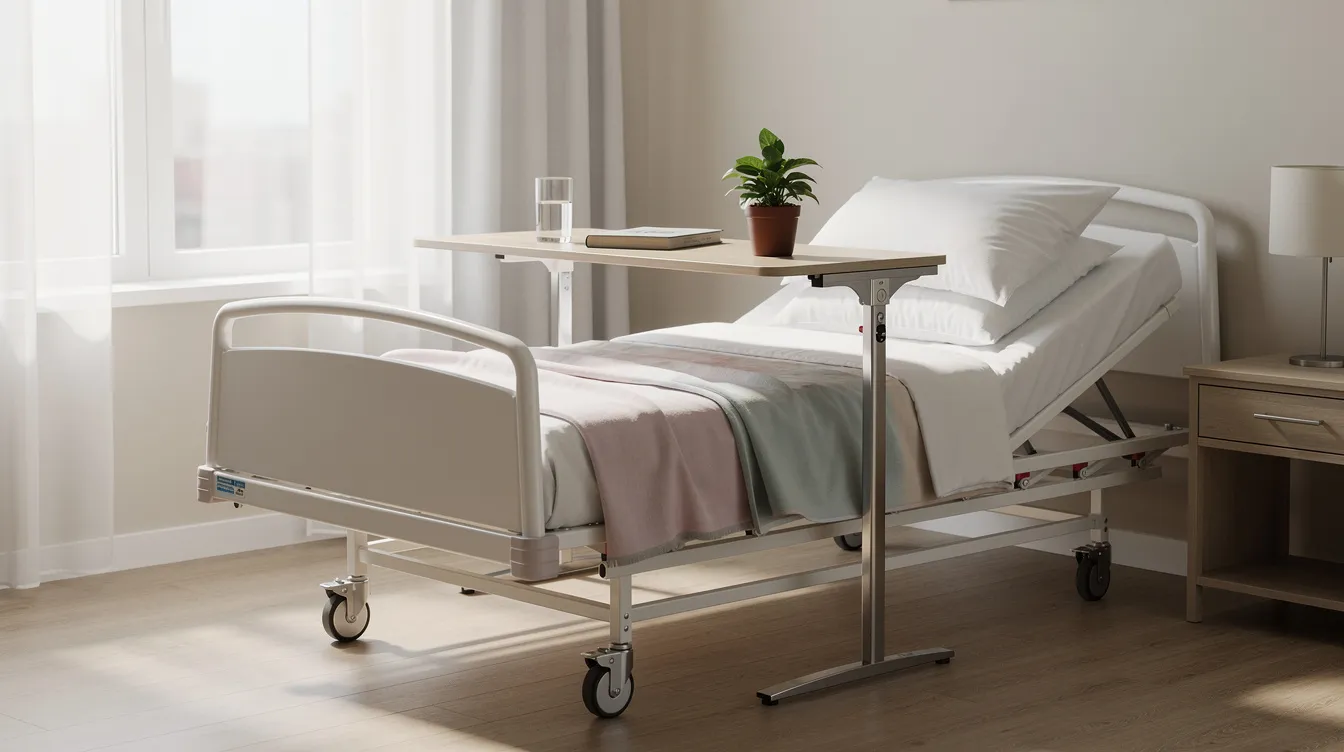
An overbed table is a mobile, height adjustable surface engineered to slide over the bed, providing a practical platform for eating, reading, and working. Originally designed as essential hospital furniture, these tables have become common in home environments since the early 2000s. Overbed tables are designed to be practical and easy to use, making them suitable for both hospital and home environments.
These tables typically feature a “C” or “H” shaped base that fits under the bed, allowing the table top to sit comfortably over the user’s lap. You’ll find them in home care settings, post-surgery recovery rooms, nursing homes, rehabilitation centers, and modern bedrooms where people use laptops or tablets in bed. Overbed tables are commonly used in hospitals, nursing homes, and home care settings worldwide.
The standard configuration includes a rectangular top mounted on a single or double steel column with a U- or C-shaped base on four swivel casters. Home-use variants became widely available on Amazon and major online retailers around 2010–2012, and in 2026, most models ship with delivery times of 3–7 business days. This guide covers key table features, types of overbed tables, materials, pricing, and how to set up and care for your table effectively.
Key Features of Modern Overbed Tables
Not all overbed tables are identical. Before you shop or add items to your cart, understanding these core features will help you find a comfortable and functional option.
-
Adjustable Height: Mobile overbed tables are designed with adjustable height features, allowing users to customize the table’s height for various activities such as reading or dining. Typical ranges span approximately 23.6–37.4 in (60–95 cm). Many overbed tables feature height adjustment levers that allow users to easily change the table’s height to suit their needs. Gas-spring mechanisms offer smooth, step-less motion, while manual knobs work for budget-conscious buyers.
-
Table Top Design: Options include fixed flat surfaces and tilting tops offering 0–45° angles for reading or device use. Look for lip edges or guards that prevent books, phones, and devices from sliding off. Textured laminated or melamine finishes provide grip and support easy cleaning.
-
Mobility: Some overbed tables are equipped with wheels, allowing for easy mobility and repositioning within a room or between different locations. Overbed tables often come with swivel casters, making them lightweight and easy to move from one position or room to another. Four omni-directional caster wheels (usually 2–3 in diameter) with at least two locking brakes ensure you can position and secure the table safely. Larger rubberized casters roll better on carpet and rugs.
-
Stability and Weight Capacity: Weight capacity is an important consideration when selecting an overbed table, with typical tables supporting 25–50 lbs and bariatric models up to 100 lbs. Lighter home tables may support around 22 lb (10 kg), while heavy-duty models handle approximately 55 lb (25 kg) or more.
-
Ergonomic Details: Curved edges or fillet corner designs reduce injury risk. Adequate under-table leg clearance ensures the user can sit up comfortably without hitting the column, and appropriate width prevents awkward reaching.
Types of Overbed Tables
In 2026, buyers can sort through several designs ranging from compact home furniture to hospital-grade equipment. Here’s what to find in stock across most retailers:
-
Standard Hospital-Style Tables: These feature a rectangular top (approximately 30 x 15 in), chrome or powder-coated steel frame, and spring-assisted height adjustment. Built for daily clinical use, they prioritize durability over aesthetics.
-
Mobile Overbed Desks for Home: Slimmer footprints with stylish wood-look tops make these perfect for bedrooms and small apartments. Overbed tables can come with features like tilting surfaces, making them suitable for use as bedside laptop desks or for eating meals in bed.
-
Split-Top Models: Some overbed tables feature split tops where one side can tilt while the other remains flat. This design keeps drinks or medications stable on the fixed section while you angle the tilting panel for books or tablets—ideal for long-term bed rest.
-
Bariatric or Heavy-Duty Tables: Reinforced columns, wider bases, and high weight capacities (often 75–100 lb / 34–45 kg) accommodate wider beds or users requiring extra support.
-
Couch and Recliner Compatible Tables: Low-profile bases fit under sofas or recliners, serving visitors in living rooms or people with limited mobility working from comfortable seating.

Materials and Construction
Materials directly impact durability, hygiene, and the overall feel of your bed table in 2026 home and clinical environments.
-
Table Top Materials: High-density particleboard, MDF with laminated finish, ABS plastic, or composite boards are common. These tables feature a smooth, non-porous surface that can be easily sanitized with hospital-grade disinfectants. Water-proof and stain-resistant properties make wiping simple.
-
Frame and Column Materials: Powder-coated or chrome-plated steel tubes provide strength and corrosion resistance. Powder coating is commonly used to meet hospital cleaning standards and services repeated disinfection cycles.
-
Base Design: The base design must fit the bed and room layout, with H-base recommended for stability and U-base for close-up positioning. Metal gauge thickness (often 14–16 gauge) affects wobble—thicker steel means a more rigid frame.
-
Hardware and Mechanisms: Gas-spring pistons, lever-based height adjustment, and internal locking collars enable smoother, step-less motion in higher-quality models.
-
Safety-Focused Details: Look for rounded fillet corners, concealed screws, non-slip pads on the base, and locking casters. These prevent unintended movement when a user leans on the table for support.
Dimensions, Height Range, and Compatibility
Correct sizing ensures the table clears bed frames and sits at a comfortable height for your specific needs. Press these measurements before ordering:
|
Dimension |
Typical Range |
Use Case |
|---|---|---|
|
Top Length |
24–32 in |
Meals (smaller), laptop + notebook (medium), multi-device (larger) |
|
Top Width |
15–18 in |
Standard activities |
|
Height Range |
23–36 in or 26–42 in |
Match to mattress height |
|
Base Clearance |
2.5–3 in minimum |
Fits under most bed frames |
-
Height Adjustment Ranges: Measure from floor to mattress top to choose appropriate minimum and maximum heights. A range like 26–42 in works well with high box-spring beds or electric beds in upright position.
-
Bed Compatibility: Low platform beds need tables with lower minimum heights, while high box-spring setups require greater maximum reach. Ensure the base fits under the frame without contact.
-
Chair and Recliner Compatibility: Check base width against chair footprint and seat height. Some models are optimized for twin or full beds, while others span queen or king sizes easily.
-
Storage and Footprint: Consider bedroom layout—the table should rotate or park to the side when not in use. In Mississauga and other urban centers with smaller living spaces, compact footprints matter.
Use Cases: Home, Hospital, and Office
Overbed tables have expanded beyond hospitals into multi-purpose home and workspace furniture by 2026. These tables provide a stable surface for meals, personal item storage, and the use of tablets for telehealth or entertainment.
-
Home Recovery and Elder Care: Serve breakfast in bed, support reading or puzzles, and keep medications and water within reach for people after surgery or with chronic conditions.
-
Long-Term Disability or Mobility Limitations: In hospitals and rehabilitation centers, overbed tables facilitate both patient autonomy and clinician workflow. At home, they serve as primary work surfaces for laptops, speech devices, and communication tools for users who remain in bed most of the day.
-
Hospital and Nursing Home Use: Infection control is critical for overbed tables, necessitating the use of medical-grade materials that are water-resistant and easy to sanitize. Repeated cleaning and compatibility with adjustable hospital beds and side rails are priorities for patients and staff.
-
Office-Style Usage: Overbed tables can serve as compact standing desks or side tables due to their slim, rolling profile. Turn your table into a rolling desk for bed or recliner work—practical for remote workers managing traffic between home and office.
-
Multi-Person Households: An adjustable, wheeled table can be shared between rooms or users, moving from a guest room to living room for temporary illnesses.

How to Choose the Right Overbed Table
This section acts as a step-by-step decision guide for 2026 shoppers comparing various brands and models. Follow these pages of advice:
-
Define Primary Purpose: Occasional breakfast in bed needs a basic fixed top under 40 lb capacity. Daily medical support or full-time workstation use demands tilt, higher loads, and smooth casters for those with limited grip strength.
-
Measure the Bed and Room: Check mattress height, bed width, rail positions, and floor clearance under the bed frame. This information prevents returns and fit issues.
-
Evaluate Key Features: Essential features for choosing an overbed table include height adjustability, stable locking casters, and easy-to-clean durable surfaces. Prioritize broad height ranges, tilt angles, lip edges, and wheel quality.
-
Budget and Price Ranges: Entry-level home tables run around $55–$80. Mid-range adjustable and tilting models cost about $80–$130. Hospital-grade or bariatric tables often command $140–$250+ due to compliance standards. Check the price in store and online to compare.
-
Check Certifications and Reviews: Look for hospital or medical-device compliance where relevant, warranty details (commonly 1–3 years), and real-world reviews about wobble and ease of assembly. Contact customer services or email the seller if specifications aren’t clear.
Setup, Adjustment, and Safe Use
Correct setup and safe daily use are essential, especially for older adults and people recovering from surgery.
-
Unboxing and Assembly: Most tables ship flat-packed and can be assembled in 20–40 minutes with basic tools. Attach the column to the base, secure the top, and install casters. Clear printed instructions and QR-linked video tutorials help users complete setup without frustration.
-
Initial Height Calibration: Set the table slightly above the mattress surface so knees and legs fit underneath. A simple guideline: keep elbows at roughly 90° when typing or eating.
-
Moving the Table Safely: Unlock casters before movement. Push from the frame instead of the top to avoid tipping. Re-lock brakes once in position.
-
Loading and Balance: Avoid leaning full body weight on the far edge of the top or stacking heavy items on one side. Keep heavier objects centered over the column for stability.
-
Special Considerations for Caregivers: Position the table for easy side access, leaving enough space for transfers or lifting devices. Ensure the table does not block bed rails or emergency exits.
Cleaning, Maintenance, and Longevity
Cleaning matters in both hospital-grade and home environments, especially for users with weakened immune systems. Follow these guidelines to extend table life:
-
Routine Cleaning: Wipe the table top daily or after meals with mild detergent or hospital-grade wipes. Water-proof laminated or ABS surfaces make this easy.
-
Disinfection: Use non-abrasive, non-chlorine cleaners compatible with powder-coated steel and plastic parts. Follow manufacturer instructions to avoid damaging finishes—cookies and crumbs left behind can foster bacterial growth.
-
Mechanical Checks: Inspect casters monthly, tighten screws and bolts, and verify that height-adjustment levers engage securely without slipping.
-
Dealing with Wear and Damage: Replace worn casters, cracked tops, or faulty gas springs rather than improvising. Many brands sell spare parts through their site or authorized dealers in 2026.
-
Storage and Long-Term Care: Park the table indoors in a dry space. Avoid exposure to prolonged direct sunlight or moisture that can warp surfaces or rust metal components.
Browse Our Overbed Tables
Ready to find the right overbed table for your home, recovery space, or care setting? Explore our collection of overbed tables designed for comfort, mobility, and everyday convenience. Whether you need a simple bedside surface for meals and reading or a heavy-duty adjustable model for long-term support, we offer options to fit a wide range of needs, room layouts, and budgets. Shop now to compare features, styles, and sizes and choose the table that works best for you.
Frequently Asked Questions
Can an overbed table be used with adjustable or electric beds?
Most overbed tables are compatible with adjustable or electric beds as long as the base can slide under the bed frame and the height range matches the highest mattress position. Check the maximum bed height in upright mode against the table’s maximum height before purchasing. A table with a 42 in maximum typically works with most electric beds.
How much weight can a typical overbed table safely support?
Many mainstream home-use models support around 22–40 lb (10–18 kg), while hospital-grade and bariatric designs may support 55–100 lb (25–45 kg). Always check the manufacturer’s stated capacity and stay below it, especially if the user leans on the table for support.
Is assembly difficult for someone living alone?
Most overbed tables ship flat-packed and can be assembled in about 20–40 minutes with basic tools. Users with limited strength or balance should arrange help for lifting the frame. Look for models that include clear step-by-step diagrams or video setup guides to make the process easier.
Can overbed tables damage floors or carpets?
Quality casters are designed to roll smoothly on hard floors and low- to medium-pile carpets, but very soft or delicate surfaces may show indentations. Choose soft rubberized wheels for hardwood floors and periodically move the table to prevent long-term marks.
Are there overbed tables suitable for children or shorter adults?
Some models offer lower minimum heights (around 21–23 in / 53–58 cm) and smaller tops, making them more comfortable for children or smaller adults. Check the minimum height specification and consider a narrower top so the user can reach items easily.
Contact Us
- Choosing a selection results in a full page refresh.

!