
River+
Global Furniture Group
Built. Adapts. Endures.

You have no recently viewed items.


Desks
Workstations
Office Chairs
Guest Chairs
Conference Chairs
Conference Tables
Pedestals & Filing Cabinets
Office Storage
Markerboards
Office Accessories

Exam Room Furniture: How to Equip a Functional, Comfortable Exam Room
Every detail in a medical exam room shapes how care is delivered. From the table a patient sits on to the stool a clinician rolls between stations, exam room furniture determines workflow, comfort, and safety. This guide walks you through what to choose, how to arrange it, and where to find products that hold up in real clinical environments.
Key Takeaways
-
Exam room furniture directly impacts patient comfort, staff efficiency, and infection control in everyday patient care across clinics and outpatient centers.
-
Essential items include exam tables, clinician seating, storage, lighting, and overbed tables that support both minor procedures and routine visits.
-
Our range of exam room furniture and medical equipment is available online at healthcarefurniture.net, with links to key categories like exam room furniture, seating, and overbed tables.
-
Choosing durable, easy-to-clean room furniture and coordinating finishes can lower long-term costs and support a professional, cohesive design.
-
This article will help you plan and outfit a modern exam room with concrete examples, suggested dimensions, and links to relevant product collections.
What Is Exam Room Furniture and Why It Matters
Exam room furniture covers every core furnishing in a medical exam room-tables, stools, overbed tables, storage casework, and accessories-and is as critical as any other piece of medical equipment in a healthcare facility. Essential exam room furniture must balance hygiene requirements and clinician workflow, and the right room furniture directly affects patient flow, privacy, safety, and clinician ergonomics during daily appointments in clinics, private practices, and outpatient centers.
We supply coordinated exam room furniture solutions designed for high-traffic healthcare environments, offering products that work together from day one.

Core Exam Room Furniture Essentials
Every exam room should start with a consistent set of core items before adding specialty medical equipment. Think of this as your checklist when planning new rooms or refreshing existing spaces.
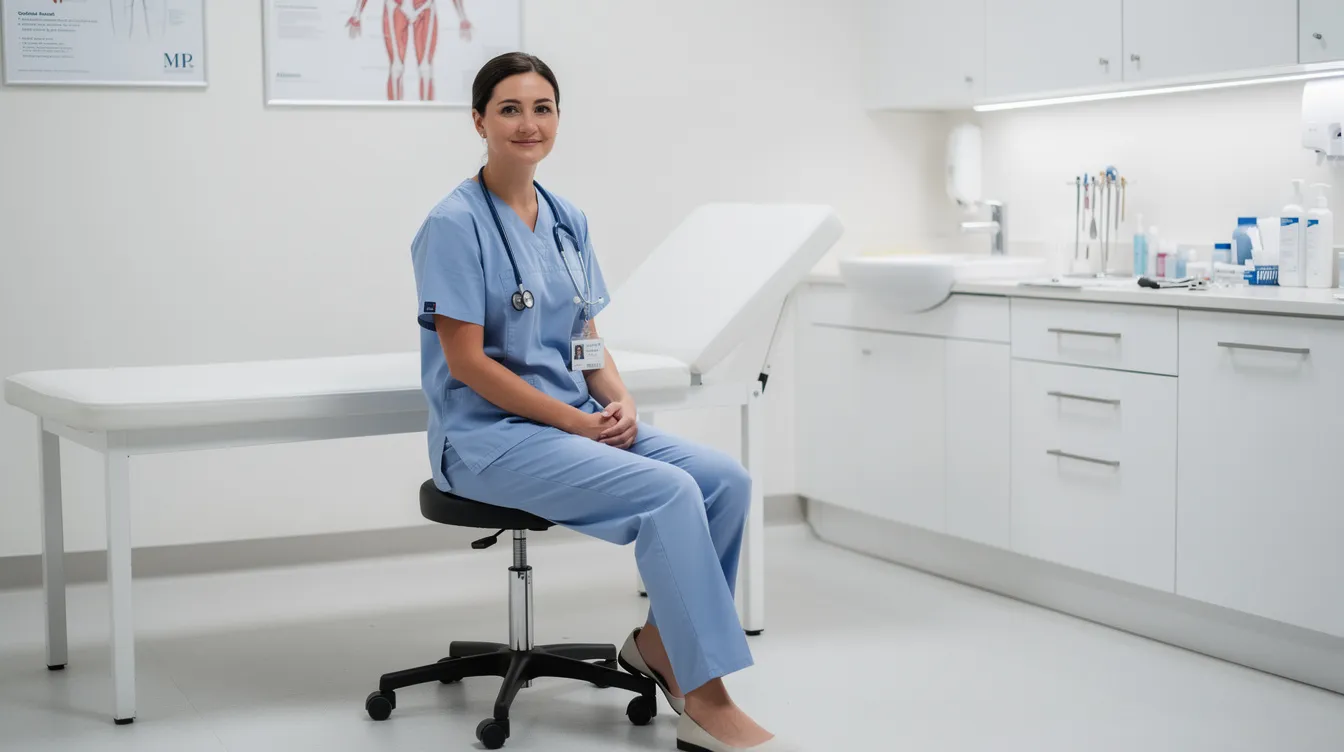
Exam tables anchor the room-a standard model runs 72–76 inches long with a 500 lb capacity. Provider stools with pneumatic height adjustment (typically 18–24 inches) let clinicians work at the right level. Patient and visitor chairs with arms assist standing, while mobile carts and Mayo instrument stands are commonly used in exam rooms for organizing tools during minor procedures. Overbed tables add flexible work surface area, and diagnostic lighting ensures proper visibility. Small accessories like kick buckets and instrument stands round out the setup.
Browse healthcare seating and overbed tables to start building your list.
Exam Tables: Foundation of the Exam Room
The exam table is the central piece of exam room furniture and often the first item patients interact with. Its configuration affects everything from transfer safety to procedure speed.
Three main categories suit different needs. Fixed-height tables (around 31–32 inches) work for general practice. Adjustable manual tables use pneumatic or mechanical lifts. A power exam table is ideal for high-volume clinics and bariatric patients, with models offering height ranges from approximately 19 to 35 inches and weight capacities from 400 to 800 lbs-critical for ADA-compliant transfers. Features like integrated storage drawers, pull-out stirrups, an adjustable backrest, and paper roll holders support both patient comfort and clinician workflow. Some models-such as a 6080-style exam table-can be configured for right-hand or left-hand step and stirrup orientation during installation.
Infection control features matter here: seamless upholstery, spill-resistant surfaces, and easy-disinfect laminate panels reduce cleaning time between appointments.
Seating and Mobility: Stools, Chairs, and Carts
Clinician and patient seating significantly influence ergonomics, accessibility, and perceived comfort in the exam room. Exam rooms require adjustable stools for healthcare professionals-look for seat height ranges of 18–24 inches, optional backrests, smooth-rolling casters, and antimicrobial upholstery. Adjustable chairs should allow feet to remain flat on the floor for proper posture during extended charting or procedures. Vented or breathable backs on chairs prevent occupants from overheating during longer appointments.
Patient seating in exam rooms provides a welcoming environment that reduces anxiety. Visitor chairs with arms make standing easier for older adults. Bariatric seating options with widths of 30–34 inches and weight capacities of 400–600+ lbs handle diverse patient needs with wipeable, healthcare-grade fabrics rated above 100,000 double rubs.
Mobile stainless steel trays keep necessary tools organized during procedures, and instrument carts with locking casters provide stable, hygienic surfaces for minor procedures. Explore our seating and stool options to find what fits your team and patient population.
Overbed Tables and Work Surfaces in the Exam Room
Although often associated with inpatient rooms, overbed tables are essential for patient care in exam rooms-they add flexible surface area for charting, procedures, and patient support. Standard models feature height-adjustable posts (roughly 28–44 inches), H- or U-shaped bases that slide under tables or chairs, and laminate or thermofoil tops that are easy to disinfect.
Typical top dimensions run about 15–18 inches wide and 26–30 inches long, fitting comfortably alongside most exam tables. Practical uses include holding procedure trays, laptops or tablets for EMR access, patient belongings, or portable diagnostic devices-complementing fixed countertops in the exam room. Matching finishes and hardware between overbed tables, exam tables, and cabinetry creates a cohesive room furniture aesthetic. Browse options on our overbed tables page.
Storage, Lighting, and Small Medical Equipment
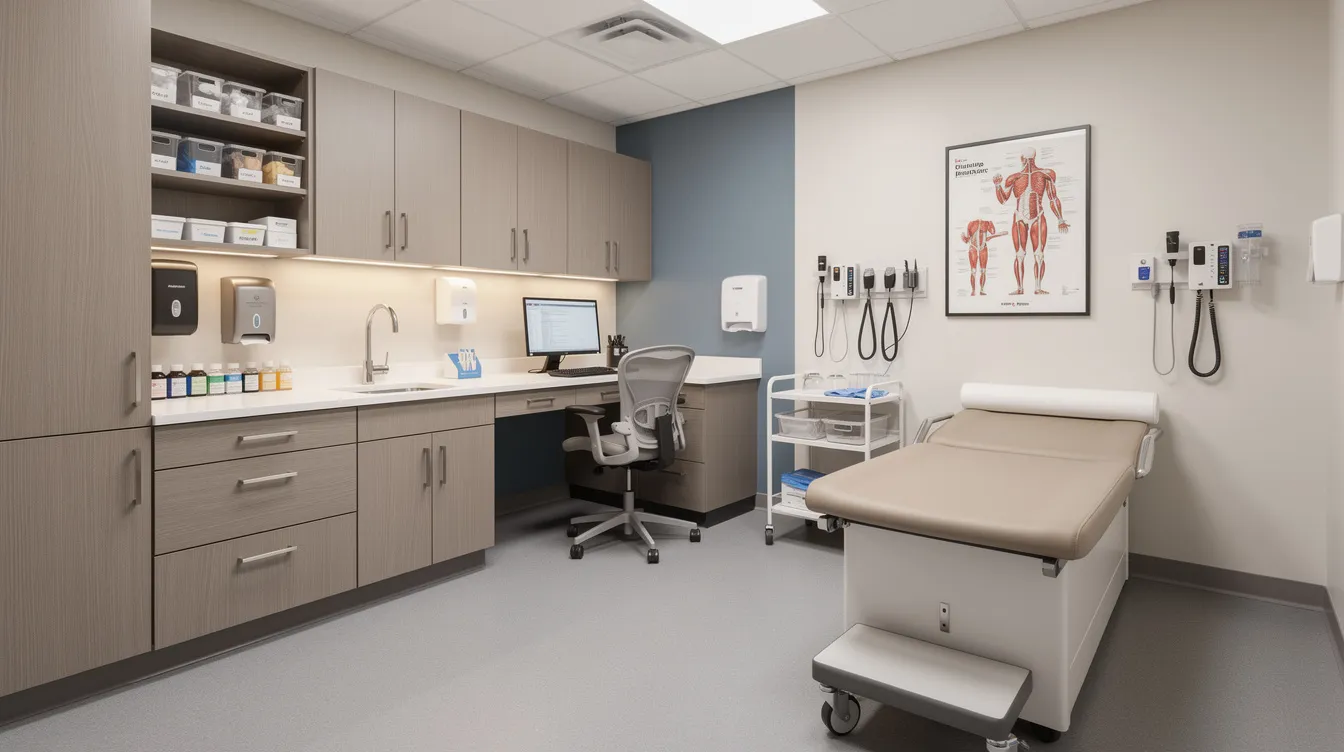
Efficient exam rooms rely on integrated storage and task lighting to keep medical equipment accessible without cluttering workspaces. Wall-mounted cabinets help keep the environment free of visual clutter, while base cabinets with lockable drawers secure medications and sharps. Counter heights of 34–36 inches with sealed laminate or solid-surface tops provide durable, easy-to-clean work zones. Open shelving works for frequently used supplies within a 15–20 inch reach zone.
Exam lights are necessary for proper examination in medical settings. LED exam lights-available in wall-mount gooseneck, rigid arm, or mobile stand configurations-deliver the intensity and color rendering needed for general exams and minor procedures. Small accessories like stainless-steel kick buckets, instrument stands, and replacement bulbs for otoscopes round out the ecosystem.
Designing a Patient-Centered, Efficient Exam Room
Layout and furniture selection influence patient privacy, accessibility, and staff efficiency from the moment someone walks through the door. Exam room furniture should create a calm environment for students, patients, and visitors alike-warm finishes, coordinated upholstery colors, and clutter-free surfaces all contribute.
Zone your room into three areas: the patient zone (exam table, seating), the clinician zone (stool, work surface, computer), and the supply zone (cabinets, carts). Keep 36-inch clear pathways between furniture, and provide wheelchair turning space of at least 60 inches where possible. A power exam table with a low height of 17–19 inches assists patients with limited mobility during transfers.
Design choices that improve patient perception include consistent furniture styles sourced from the same supplier, rounded edges for safety, and cost effective finishes that last.
How to Choose Exam Room Furniture for Your Facility
Whether you're outfitting a new clinic or renovating existing spaces, keep these decision factors in mind: your patient population (pediatric, adult, or bariatric), daily visit volume, available room size, infection control policies, and budget constraints.
Start with essentials-exam tables, stools, lighting-then layer in comfort items like visitor seating and overbed tables, and finally add room-specific accessories such as specialty carts and procedure lighting. Choose durable, healthcare-grade finishes and reputable brands to reduce total cost of ownership over 5–10 years. Look for warranties in the 3–5 year range on heavy-use items.
Our team at healthcarefurniture.net is happy to help with space planning and product selection. Browse our collections and reach out via email for lead time estimates on any products currently on sale. The right solutions start with choosing furniture that fits your facility's needs today and scales with it tomorrow.
FAQ: Exam Room Furniture and Medical Equipment
How often should exam room furniture be replaced?
Most high-quality exam tables and seating are designed for 8–12 years of regular clinical use. Actual replacement cycles depend on wear, upholstery condition, and evolving infection-control standards. Items showing torn upholstery, unstable frames, or outdated compliance features should be prioritized for replacement regardless of age. It's noted that facilities should review their room furniture at least annually and browse replacement options when planning upgrades.
What materials are best for exam room furniture surfaces?
Healthcare-grade vinyl, polyurethane upholstery, and high-pressure laminate or solid-surface tops are preferred because they handle hospital-grade disinfectants without degrading. Seams should be minimized or sealed, and any wood finishes must be properly protected for clinical environments. Verify manufacturer cleaning guidelines and match them to your facility's protocols before purchasing.
Can overbed tables really be useful in outpatient exam rooms?
Yes. Overbed tables are increasingly used in exam rooms as flexible work surfaces for laptops, procedure trays, and patient belongings-especially in compact rooms with limited counter space. They can be repositioned quickly between rooms, enhancing efficiency. Consider at least one height-adjustable overbed table per one to two exam rooms.
How can I ensure my exam room layout meets accessibility guidelines?
Maintain clear door openings of at least 32 inches, provide pathways of 36 inches between furniture, and ensure maneuvering space of 60 inches around the exam table. Use adjustable-height or power tables to assist transfers. Choosing compact, mobile furniture-rolling stools, carts, and overbed tables-helps maintain clear floor space and suit smaller rooms.
Do I need different exam room furniture for pediatric vs adult practices?
While many core items overlap, pediatric exam rooms often benefit from lower-height tables, colorful yet cleanable finishes, and additional parent seating. Adult or bariatric-focused practices should prioritize higher weight capacities, wider seating, and power-adjustable tables to handle diverse patient needs. Consider configuring different furniture packages while maintaining a common aesthetic by sourcing from the same collections.
Contact Us
- Choosing a selection results in a full page refresh.

!